
Campiness is a contentious yet absurdly effective tool in the world of fictional storytelling. On one hand, if a story is too campy or doesn’t take itself seriously, it runs the risk of losing any stakes or audience investment; afterall, if the characters don’t seem to care, why should we? However, a story can also take itself too seriously, opting to ignore the obnoxious yet entertaining aspects of its own world. To tread the line of camp is to attempt the monumental task of making audiences laugh at and with the game so to speak. It’s not too often we see this done well, but when it is, the product that emerges becomes a monument to what we in the business call “damn good writing.”
◆ INTRODUCTION
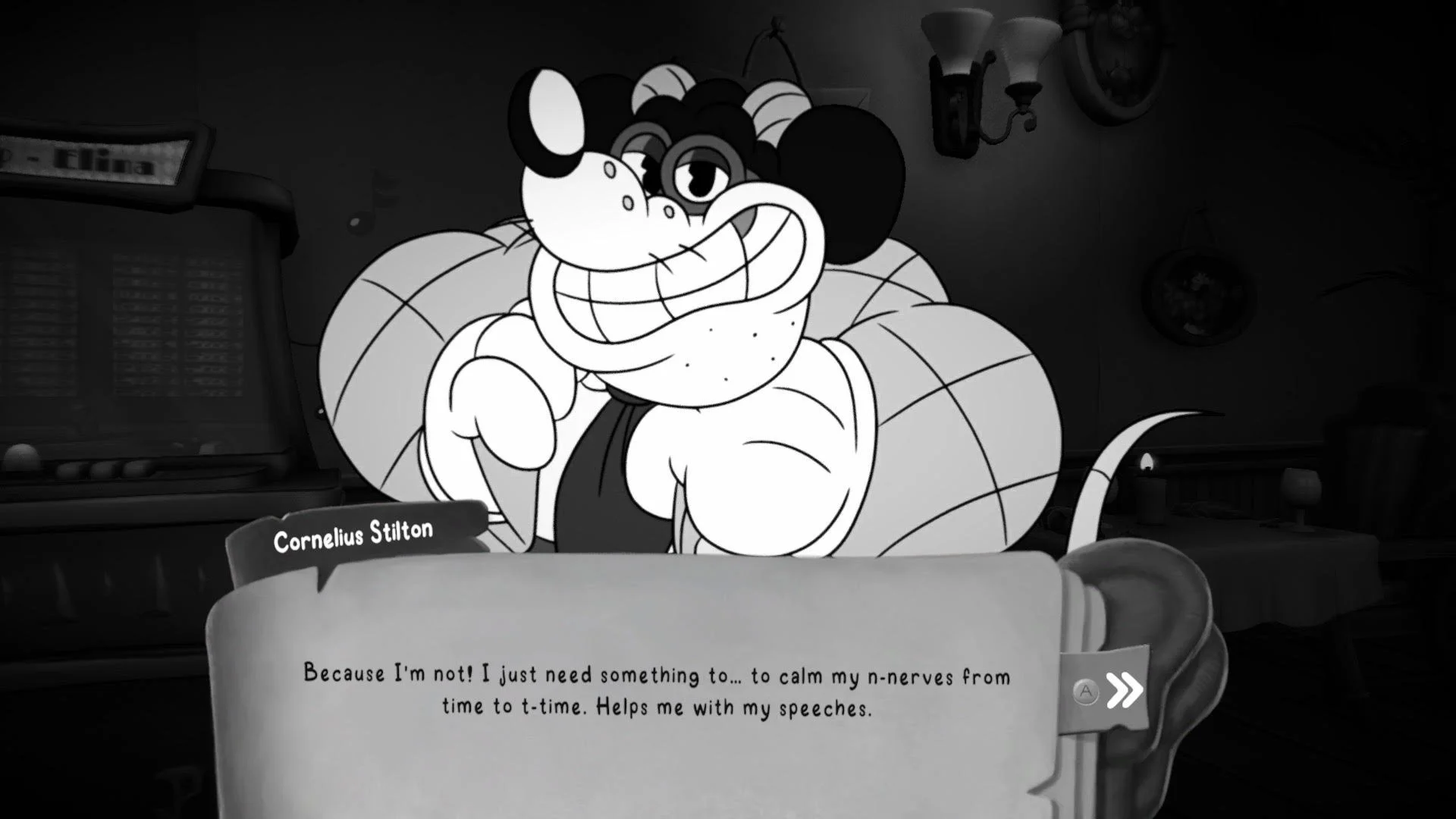
Mouse: PI for Hire is a cartoony 2.5D first-person shooter developed by Fumi Games and published by PlaySide Studios earlier this year. This rubberhose-animated boomer shooter had a good deal of hype coming up to its release, and ironically, its now infamous review from IGN only sealed its popularity. It’s no wonder why considering its many draws: a throwback to classic boomer shooters, a tribute to the art and animation of Walt Disney and, the most surprising thing to me, an engaging and fun story with interesting themes. Between its cheese slingin’ action Mouse: PI for Hire is an incredibly charming game with something to say.
◆ GAMEPLAY & DESIGN
The most simplistic aspect of this game is its action gameplay: a throwback to classic boomer shooters defined by hordes of enemies and an array of fun weapons. The weapon selection itself, while entertaining, is not exactly complex. Right from the beginning the player is given a mauser and a shotgun, named the Micer and Boomstick respectively, and arguably those are all you’ll really need to beat the game. By the time I got the… James Gun, a wonderfully renamed tommy gun, my combat experience had essentially hit its peak. That’s not to say any of the weapons are bad, far from it. The combat and enemies just doesn’t change or challenge the player enough to need those other weapons. However, in spite of this simplicity, the game still feels extremely fun and energetic right up to its ending. I wondered for quite a bit of my playthrough why this was the case, and I think the answer boils down simply to a commitment to style. There is still nothing more satisfying to me than watching the player whip out the Boomstick and reload it with that goofy animation. Fumi knocked it out of the park with animation and design, capturing the rubbery and satisfying movement of classic Disney cartoons perfectly. This animation style frankly carries the game to its final act, making every moment feel fun and fresh in spite of the few core changes to encounters. Through every enemy death and every environmental event the game sticks to its guns (pun absolutely intended in this case) displaying incredible care for animation and eye candy for the player. Sure, its combat depth has nothing on something like Doom: Eternal, but the designers made sure I had fun, and that is what matters most.


The designers made sure I had fun, and that is what matters most.
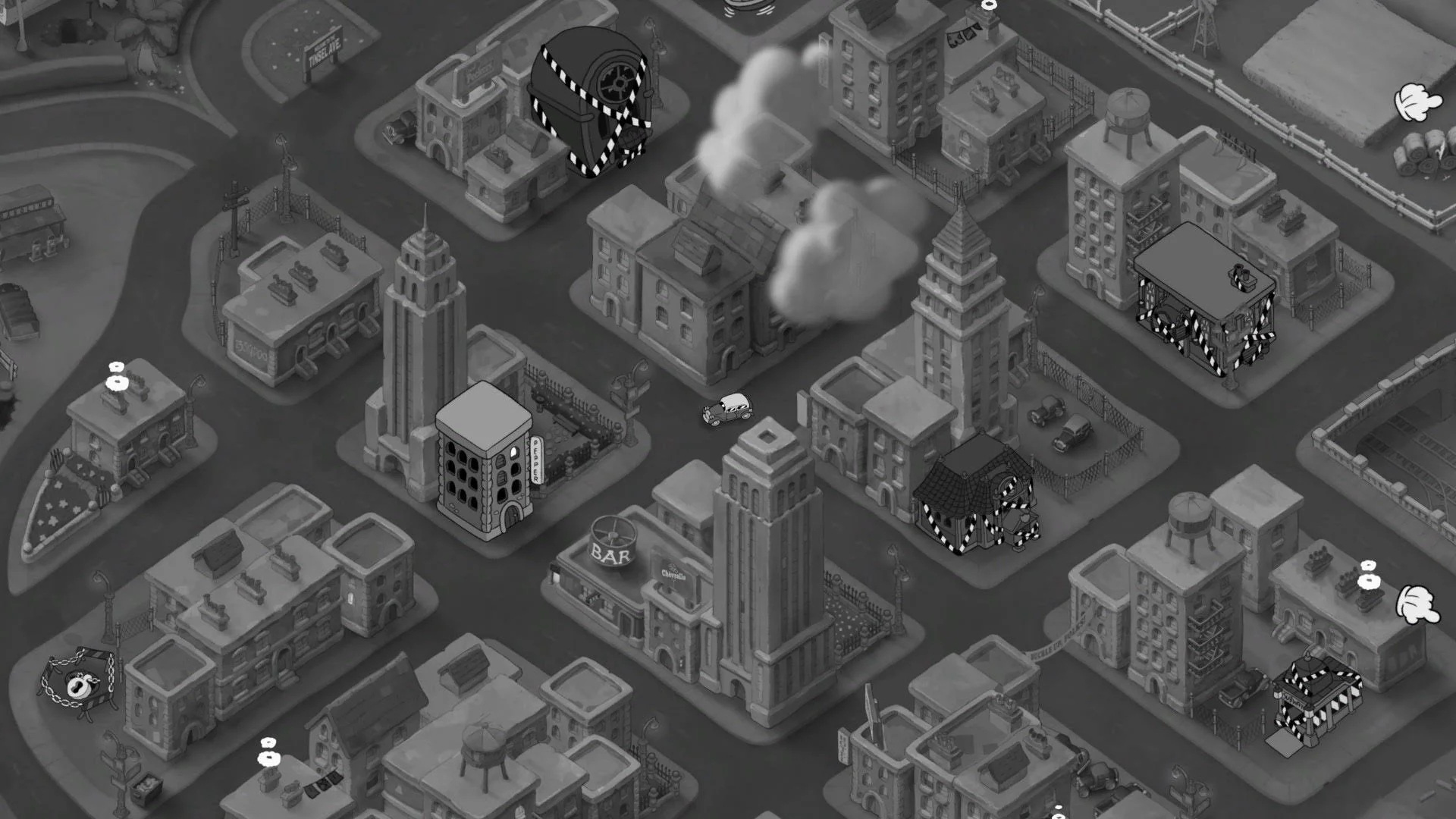
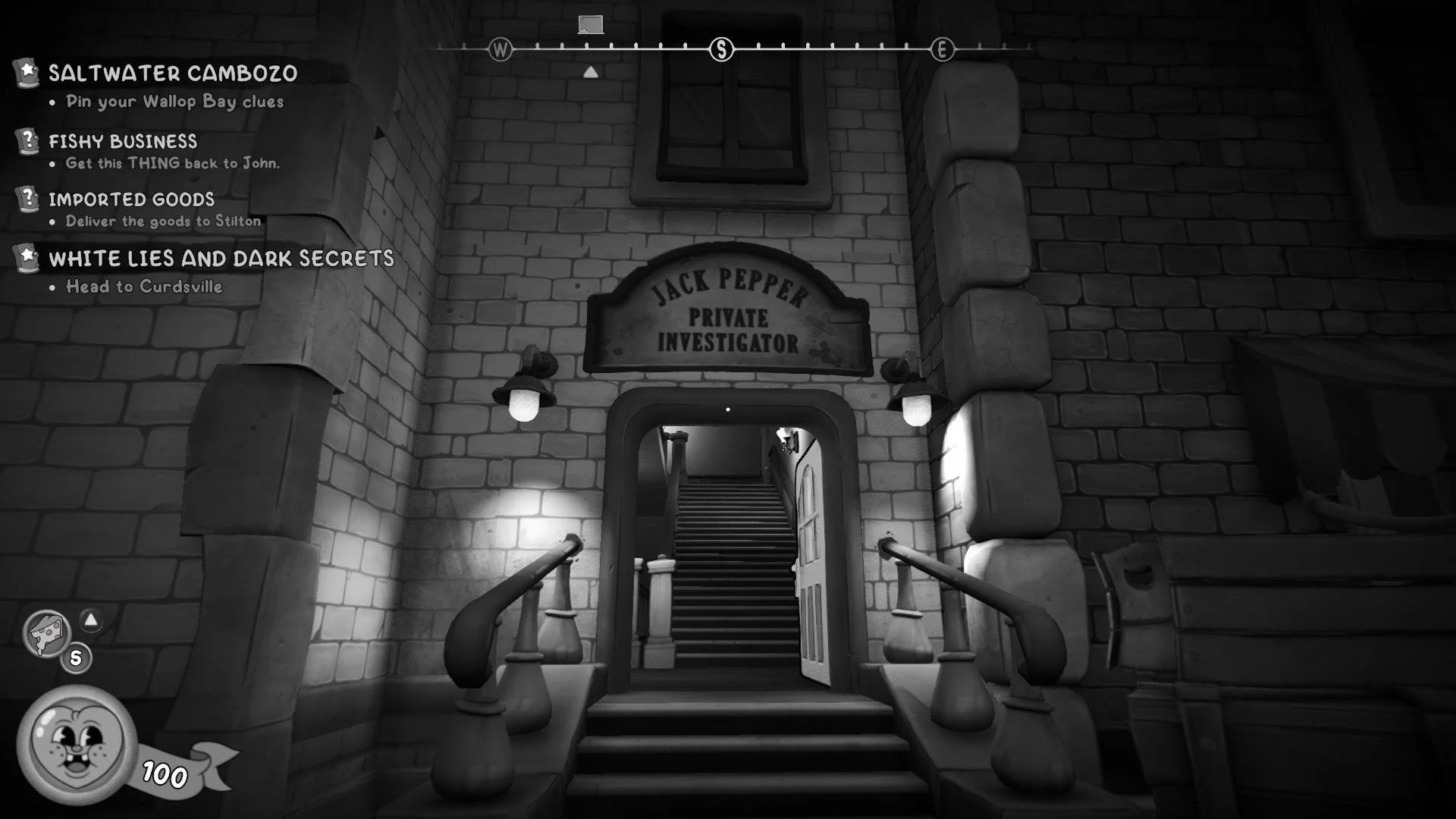
Exploration and level design, much like combat, are fun and simplistic as well. Levels are built to be super linear outside of a couple exceptions, and often the player will be thrown from one combat encounter to the next. Each of the 24 levels takes the player to a uniquely designed area, all of which have a gimmick that sets them apart or moves the story forward. There are of course many secrets hidden around just about every corner that offer nice cash and ammo rewards or schematics for upgrading weapons. I am a completionist at heart, so when I discovered that all of the collectibles and secrets are permanently missable, I was worried it would detract from my experience. The game however surprised me, revealing its genius in keeping me moving forward and focused on the task at hand. Because there are so many secrets that are definitely not supposed to all be found in one playthrough, the pressure was essentially off for me to collect them all, meaning I could focus on the combat and incredible narrative instead. I did however complete all the side-missions given by the supporting characters, which I highly recommend, as these mini-stories offer funny moments or incredible world building conversations with characters. These are missable too however, so my advice is just to speak with all the side-characters in the hub area before going on any mission; they will often have something interesting to say regardless.
One last aspect that I personally wanted to highlight was this game’s stellar soundtrack, a crucial aspect of my enjoyment. The composer Patryk Scelina and the band that played his songs should be commended for crafting such an entertaining array of jazzy tunes to gun down mobsters to. It’s Cuphead-esque, which makes sense considering their similar style goals, and I love every second of it.
◆ STORY (SPOILERS)
Now for the story: holy crap I did not expect to be invested in a world full of cheese-dealing mice! The narrative is fantastic, managing to touch on some very dark topics amidst the obnoxious comedy in the world.
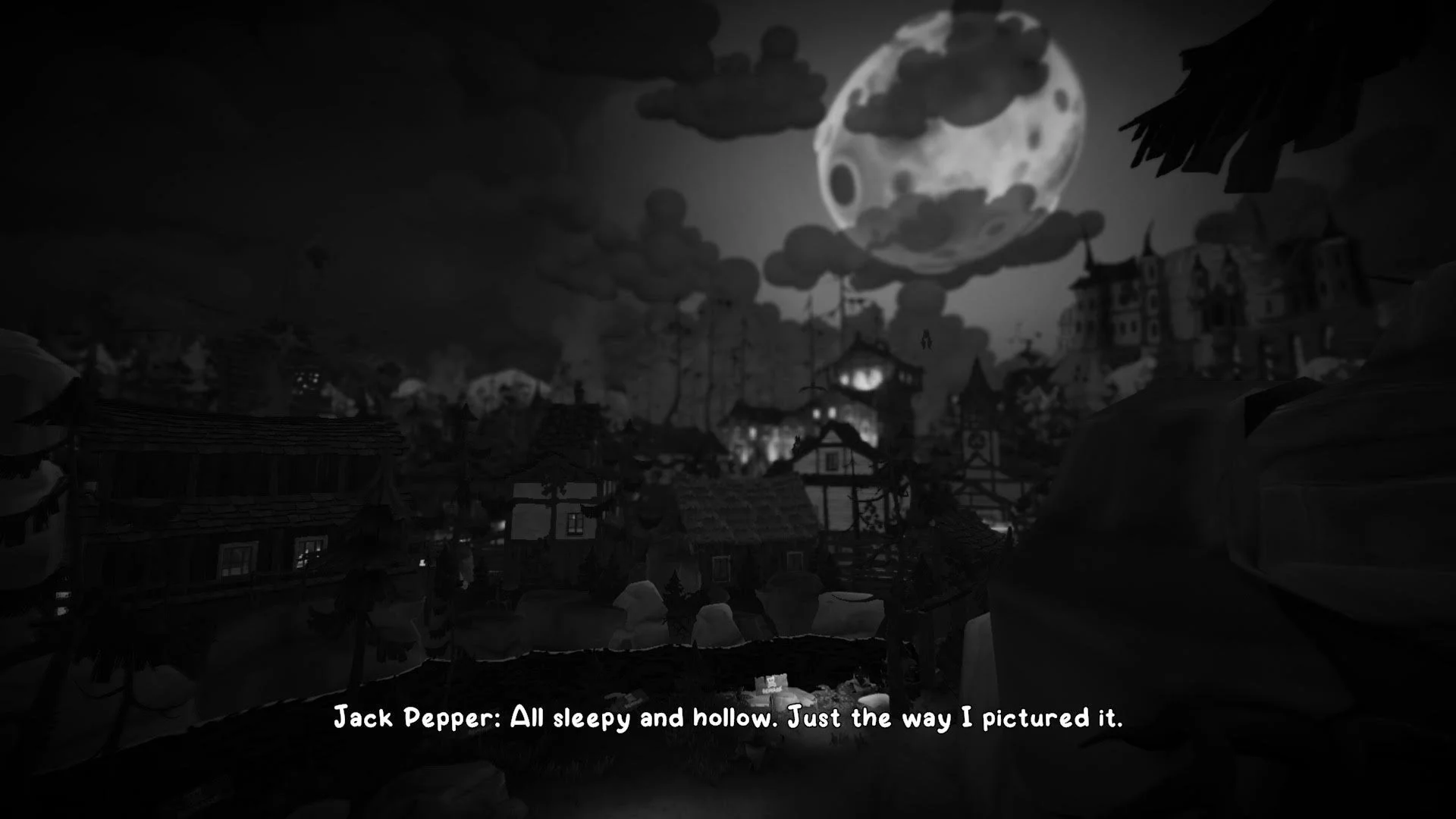
The story takes place in the city of Mousburg, an American noir-styled city of cartoony mice, corrupt mobsters and “cheeseleggers” working underneath the city's grand spectacle of Hollywood productions and divisive politics. In the outskirts of the city resides a spooky swamp and forest where a couple of the financial elites in society have made their home… alongside the slums they lord over. Designed as a parallel to the real world, the story is set in the 1930s. The implications of such a time become very apparent later on. The player controls Jack Pepper, a grizzled war veteran, former cop and now private investigator who is about as cliche as that description implies. His constant sarcasm, quips and grievances accompany the player throughout the entire game making for, once again, an incredibly charming experience.
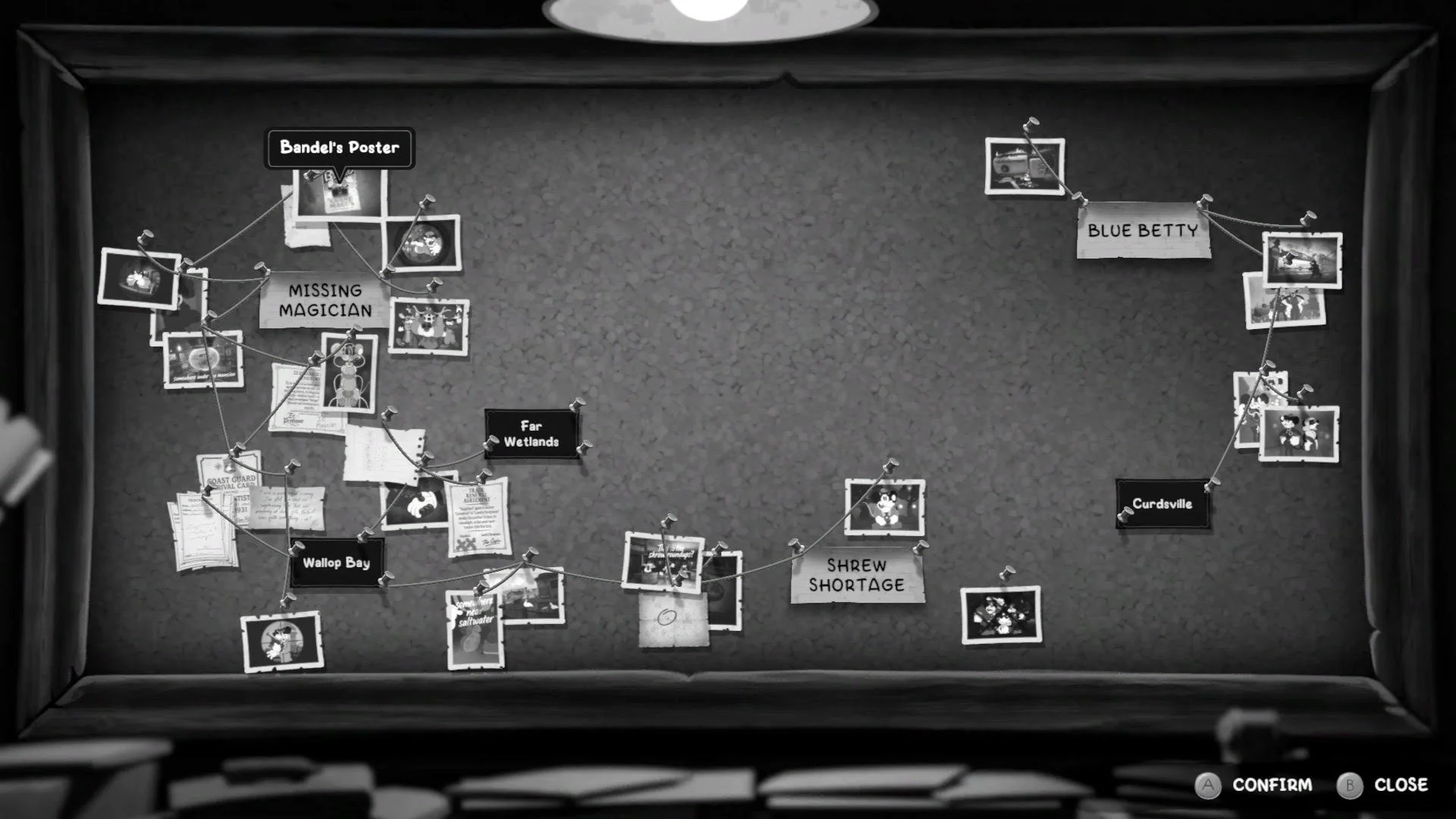
The plot revolves around Jack’s efforts to solve three big cases that begin to intertwine into a huge citywide conspiracy. These are the mysterious disappearance of the magician and Jack’s old friend, Steve Bandel, the mass kidnapping of shrews, a smaller species of mice, from their homes, and the murder of the famous actress, Betty Lynch. The player will have to hop from case to case in attempts to make sense of how the three connect. This is done splendidly well by the writers who manage to develop these three plots synchronously, and by the time things come together, you realize the true brilliance of the game’s themes. This game nails the slow connection of pieces in any good detective story, and I urge you to play through it yourself before I spoil the reveal.
By the end of the game, it will become clear to Jack that these events are all caused by the Big Mouse Party, a political party in Mousburg that believes mice should be big and strong, often discriminating against shrews for being small. Throughout the story this party keeps coming up in the background, and looking at their design, aggressive discrimination and the time period, it becomes pretty clear what the parallel for these corrupt mice is. They are this world’s Nazi party, placed right around the time where they actually began rising to power before World War II. This incredibly bold parallel for a cartoony and humorous game adds so much nuance and stakes to the story. The game doesn’t shy away from this parallel either, as BMP is found to literally be kidnapping and trafficking shrews to be experimented on by German scientists called “Ze Scientists” because of course that’s their name. The fact that shrew rhymes with Jew only seals the deal, though I could be reaching too far with that one.

BMP has their hands in every corrupt business in the city. They orchestrate everything from behind the scenes to guarantee their place in the city’s government, and it is all run by one mouse: Milford Soyer. Milford is a very fun villain, displaying cartoony animations to go along with his passionate speeches and a certain cunning that is super satisfying to take down. His obvious parallels to Hitler and other Nazi political leaders, again, demonstrate a great commitment to the themes the writers wanted to convey. His final boss fight is the best in the game consisting of hordes of enemies, a whole mini-boss in the middle of it and Milford manically raving about “free speech” and “fake news” as his plan falls apart.
While this world is black and white, its issues are anything but.
Milford and BMP are just one aspect of the story that I loved. There are so many great conversations and themes between Jack and his friends throughout that really sell the idea that while this world is black and white, its issues are anything but. There’s a certain tragedy in the game’s themes as characters acknowledge that stopping Milford won’t end the oppression against shrews. The unfortunate realization that if this world really is a parallel to ours, World War II is still on its way, may speak to a deeper message about how deep and seemingly unending the hatred and oppression of others has rooted into society. I could be reaching, but this is what the game made me think about, and at the end of the day that is what any story needs to do: make us learn and think.
◆ CONCLUSION
Mouse: PI for Hire is both a game of simplicity and complexity at the same time, just as it is campy and captivating at once. For a small indie game, it certainly stands out as a cut above even some large AAA games. I highly recommend this game, it is fun, charming, hilarious and thought-provoking all at once. I can’t wait to see what Fumi Games does next.


◆ TRANSMISSIONS ◆
Played it? Have thoughts? Share them below.
Keep it PG-13, yo. ❤